
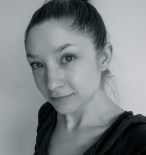
 I am a university lecturer in English literature whose primary teaching and research area is post-1900 American and British literature. I am particularly interested in the relationship between storytelling and the environment; representations of nature and place in contemporary writing of all genres; and the regional literature of New England. From 2002-2009, I taught at Oxford University. Based in Massachusetts, USA, since 2009, I teach online literature courses for Oxford University, supervise the teaching staff for my department’s online creative writing and literature offerings, and serve as Assessor in English for Oxford University’s Certificate of Higher Education. You can see upcoming course offerings at my Oxford profile page. I earned my doctoral and master’s degrees from Oxford University, and my BA (summa cum laude) from Tufts University.
Before taking up academic roles, I worked in the field of wildlife protection monitoring endangered shorebirds. When not teaching literature, I practice and sometimes teach yoga; try my hand at creative writing; hike beach trails and kayak when the tides cooperate; and help my husband fix up our almost century-old Cape Cod home.
 Dr. Jennifer E. Dunn
Would like to know if your course “critical reading” would be about learning to read critically any literary work (fiction and non-fiction) or just fiction ? and what about argumentative essays ?
Thanks, AB
Hi, thanks for your query. The course focuses on narrative fiction and poetry and analysing the literary techniques (metaphor, theme, motif, metre, etc.) in such works. But we also read and assess literary criticism, book reviews, and theory, which are non-fictional. So the skills taught apply to the critical reading of different types of writing. Two weeks of the course are dedicated to planning and crafting argumentative essays (again, in the context of literary analysis). The final written assignment, which is assessed by me, is an extended argumentative essay about 1-2 literary texts. I hope this helps, but feel free to contact me if you have more questions.
Hi, Thanks for your reply. Aren’t these two courses tutored by you (critical reading and literary theory) the same ? if not, what is the difference ?
I myself interested to improve my reading skills in any literary subject (literature, history, philosophy, politics, etc …).
Kind regards,
Hi, the courses are complementary but have very different content and use different textbooks. Critical Reading focuses on analysis of prose and poetry, mostly from the perspective of close reading or practical criticism. In other words, we attentively analyse literary techniques such as metre, rhyme, metaphor, narrator type, motif, theme, and so on. We also discuss literary criticism and best practice for writing English essays.
Literary Theory is about theory: Marxist, feminist, post-colonial, post-structuralist, Russian Formalist, and other approaches to literary study and textual analysis. We do analyse prose and/or poetry each week, but mainly as a way to put theory into practice. The primary exercises are to read essays by theorists (Derrida, Lacan, Eagleton, Cixous, and many others) and to discuss the history, concepts, and applications of literary theory.
Good morning Dr. Dunn,
I’m avid to be enrolled in ‘Contemporary British Fiction’ beginning in January! It’s my first experience with Oxford University Continuing Education Online Learning.
Cordially,
Steven
Hello Steven, I’m so pleased you’ll be joining us next term. I think you will enjoy studying online with Oxford University. Our online discussions are interactive and mimic the classic “Oxford tutorial,” and it’s a wonderful way to learn about literature with like-minded readers from all over the world.
Thank you kindly for your reply. I’m preparing now by reading, (in some cases, rereading,) the titles in the order they are listed in the course description. I love reading for pleasure, but I had forgotten how much I really love reading for comparison and contrast in order to apply that thinking to fledgling critiques. I hope you have a terrific holiday season and I’ll see you in January.
“White Teeth” or “Beyond Black” are well bellow “Never Let Me Go”. Why did you choose these two? Plenty of books around without depth. Then the other thing I dislike – “British”. What’s the point in this globalized world? Oxford, Cecil Rhodes, and Dianaland … Funny because I don’t see writing on this …
HI JP. Perhaps you should take the course. We explore these very questions of literary value and classifications (e.g., is there such a thing as ‘British’ literature?).
God, save me please! One of the worst torments around is having to read what one dislikes. Such as “White Teeth”. After page 150 that book was sent to the dust bin. See ya …
Hello, Jennifer
I intend to take the Literary Theory course starting on the 20th of april – next wednesday. Do you think this course could enrich my qualifications for when I apply for a masters on literature at Oxford next year?Are these kinds of courses even considered when one applies for a masters at Oxford?
Sincere regards
Cilene
Dear Cilene, I look forward to working with you on Literary Theory! All prior coursework is considered during the admissions process, but because I’m not on the admissions committee I cannot comment on how much weight is given to any given course. I can only say that exposure to theory and a strong academic record would be looked upon favourably by most institutions. If you would like to discuss this further, please feel free to contact me after the course has started. (On Wednesday you’ll be given an email address to use to get in touch with me.)
Hi, Jenn!
I was one of your students at Oxford’s Literary Theory online course last year – don’t worry if you don’t remember me, I understand completely and can help refresh your memory if you’d like that. Hint: I’m Brazilian and throughout the course, half my jokes wouldn’t work when translated – something that often made me look silly instead of witty, cramping my literary style.
I’m applying for another Master’s here in the UK and would like to have a discussion with you in a more…shall I say ‘private’ context?
I wasn’t sure if I was still allowed to make use of the email address we had for the discipline so your blog seemed adequate enough.
Could you, please, give me an email address or another medium through which I can contact you?
I hope I’m not intruding too much
All best,
Cilene Tanaka
Hi Cilene! I’ll contact you from my departmental address.
Oh!That is perfect.
I’ll be anxiously waiting.
Thank you very much
Dear Jennifer Dunn, my name is Gabriele Biotti and I am an italian school teacher and researcher. On December, 30 I enrolled for the online course “Literary Theory: an Introduction” (starting on January, 15). I am very interested in Film Theory (I have a PhD degree in the field) and Literary History and Theory and I choosed this course to deepen theoretical questions concerning writing practices, fiction and the novel.
How can I get more information on the course personal platform, passwords atc.?
Thank you so much,
Kind regards,
Gabriele Biotti
Hi Gabriele, I’m so pleased you’ll join us this term! I look forward to welcoming you to the course when it begins next week. On the day the course opens, the department will contact you directly to send joining notes (general information, an email address at which to reach me, your log-in details, etc.). At that point, you will be given full access to the course site and you and I will be able to communicate more directly via the course fora.
Hello Miss Jennifer,
I would very much like to take your critical reading course online but I am not very confident in my essay writing skills. Will that be an issue or is it something that we will go over in the course?
Thank you!
Hi Nourah, thanks for your question and not to worry, that won’t be an issue at all. We will discuss essay writing as part of our studies, but to get started on the course, you only need an interest in learning more about literature! I hope you are able to join us, and please don’t hesitate to contact me if you’d like to know more.
Dear Jennifer,
I was one of the participants to the “Literary Theory: an Introduction” online course, recently finished. Thank you for your tutoring! I found the course very interesting for developing some research skills and questions I always wanted to better understand. I have read with great interest and attention the two feedback reports concerning my assignments.
I just wanted to add some more reflections on the course and its theoretical questioning. I had never worked before on Orwell’s book, while my readings of Beckett’s work have been constant in the years. Years ago I published a book with an interdisciplinary approach (between film studies and literature) where a chapter was dedicated to Beckett’s plays for television written in the 70’s and early 80’s.
My research work is essentially based on film studies (I graduated and later obtained a PhD degree in the field, at Lille3 University in France). Literary Theory has always been another important research field for me and the course really helped me to shape further knowledges, expecially on some authors and research schools in the field.
I still have a specific interest for interdisciplinary itineraries: Sebald’s novels and his use of images, works about memory (the books of Modiano) and also some metaphisical implications in novels (works from Borges and other Latin Alerican writers such as Onetti). I have surely acquired a more complex vision of literary theory and also of its possible intersections with other research fields.
Reading Eagleton’s book was a positive experience for me: I knew this book only by name and it shows clearly issues, problems and, I would say, the potential of literary theory (in this case, from a political point of approach). Another theoretical question for me is surely that of literary canon(s) and of the historical reception of literary/narrative works. I have had the occasion to think about canon and its actual, complex nature of ‘global’ discourse. In this sense, it contains historical, aesthetical and social questions and it offers to readers the effects of this complexity.
Gabriele
Dear Dr. Dunn,
I am enrolling into the upcoming run of your Critical Reading course online. I am very excited to start.
I was wondering if you could provide me a list of works of fiction that you usually refer to during the studies? I don’t mean the recommended reading list (“An Introduction to Literature, Criticism and Theory” and others) but the novels and poems that you analize. I suppose that there are dozens of books that are mentioned during the course, but maybe you could name those that you consider the most important?
English isn’t my native language so I may need more time to read them and I’d like to take advantage of the free time I have this summer to prepare in advance.
Kind regards,
Armen.
Hi Armen, congratulations on joining the course! I will email you from my departmental account with some information about the readings. I look forward to working with you!
Dear Dr. Dunn,
My name is Katrina and I am a Grade 12 Academic student. I am working on one of your essays where I have to annotate it. I was wondering if you will be willing to answer some questions I have on your piece ‘Feminism and The Handmaid’s Tale’.
Kind Regards,
Katrina
Hi Katrina, I’d be happy to answer questions. I’ll send you an email.
Hi Jenn,
my name is Nicole. Can you kindly send me a list of books that will be analysed in June 2020 “s critical reading course ? I just want to know the list before I can register it if its not too much trouble for you.
Thank you so much
Hi Nicole, I look forward to working with you on the course! The only texts you’ll need ahead of time are the three textbooks listed on Oxford’s site and in the joining notes the University will send/has sent you. From time to time once the course starts, we’ll look at short extracts from fiction and some poems, but these will be assigned along the way. All will be read online, so no need to order books than the textbooks. Also, because the poems and extracts are brief readings we’ll analyse together as a group, they are best read at the time rather than before the course begins. If you have any other questions, feel free to let me know!
Hello Jenn,
so sorry for the late reply, for some reason I did not get notification in my email so I did not know you replied.
I was just wondering if you can kindly give me some names of the writers or poets that we will go through in this course.
Thank you so much dear
sorry, also names of the books of authors/writers as well. not the textbooks. thanks so much dear.
Nicole
Nicole, we typically don’t share that information before the course starts because it’s best to read the assigned literary texts along the way rather than ahead of time. I’ll email you from my University email account shortly–check your inbox for a message.
Dear Dr Dunn, I am in the process of applying for the Critical Reading online course starting soon. I have tried to get the books mentioned but one is currently unavailable from the online sellers Goring, P., Hawthorn, J., and Mitchell, D., Studying Literature: The Essential Companion 2nd ed (London: Bloomsbury Academic, 2010) ( temp out of stock). I have ordered it for when it is next available, but wondered if this would be a huge issue for the course as it seems to have been unavailable for some time now.
With best wishes
Paul
Hello Paul, thanks for checking in and no, a delay on that book won’t be a big problem. There have been delays on many book deliveries due to COVID19 disruptions, and we’re finding ways to work around this so everyone can keep their studies going. Keep your order active just in case the text becomes available soon, but rest assured I’ll be able to provide support around any book delays once the course has begun. And I shall hope to meet you in the virtual classroom soon!
Perfect, thank you. Yes I have it as ‘send when available’. I am looking forward to the course.
Woo hoo! The books have arrived in time for the Critical Reading course ! I also notice in your Introduction to Theory you say to get the second edition of Rivkin and Ryan and.. .this has arrived too! So all being well I will enrol on that course next. Looking forward to meeting you online.
Hi Paul, that’s great! Looking forward to meeting you on the course. 🙂
Hi Jenn,
I hope this message finds you fit and well. My name is Desiree (Ya-Huei Lin), and I was on the Literary Theory and Critical Reading courses in 2018. I had been thinking about whether I should contact Oxford University in order to reach you, and I am glad I have found this website. I sent a message about a week ago to your email accounts of the courses, so could you please check your university accounts. Thanks in advance for reading my email.
Best regards,
Desiree
Hi Desiree, it doesn’t look like your emails came through. I’ll contact you from my departmental account.
Dear Dr. Dunn,
I am enrolled onto the next Critical Reading course online. If possible I would like a list of works of fiction that you usually refer to during the studies? I don’t mean the recommended reading list (“An Introduction to Literature, Criticism and Theory” and others) but the novels and poems that you analize. I Dear Dr. Dunn,
I am enrolling into the upcoming run of your Critical Reading course online. I am very much looking forward to it having done Writing Poetry this term. I was wondering if you coul let me have a list of works of fiction that you usually refer to during the studies? I don’t mean the recommended reading list (“An Introduction to Literature, Criticism and Theory” and others) but the novels and poems that you analyse. As I have a serious health condition that sometimes causes fatigue and malaise I would like to take advantage of the free time I have prior the course starting to prepare.
Best wishes
Karen
Hello Karen, I’ll contact you from my University email address shortly. I look forward to working with you on the course!